







The Agenda
MAINSTREAM UK Summit - 20-21 October • Millennium Point, Birmingham
Pre-registration & Badge Collection at Millennium Point
Comma separated speakers , company will appear here when published
Pre-registration & Badge Collection at Millennium Point
The Nature of Success
Comma separated speakers , company will appear here when published
Drawing on lessons from iconic African animals, Ian Schubach reveals how maintenance leaders can build adaptable, proactive cultures that strengthen collaboration, improve reliability and thrive amid complexity, pressure and change.
Ian Schubach is CEO of leadership consultancy Red Leaf and co-founder of Tracking Success. For three decades, he has delivered keynotes, leadership programmes and facilitated team meetings across Asia Pacific, Europe, South Africa and the United States. A former safari guide and experienced storyteller, Ian uses nature's universal truths to illuminate business challenges. He pioneered the Indoor Teaming Adventure methodology, creating immersive experiences that accelerate leadership development, strengthen collaboration and help organisations achieve their priorities.

African Safari Guide and Adventurer
The Nature of Success
MAINSTREAM Jumpstart Networking sponsored by OneRiver Software
Comma separated speakers , company will appear here when published
Kick off your MAINSTREAM experience at the Jumpstart at the Millennium Point Thinktank Science Museum - sponsored by OneRiver Software. Pick up your name badge, enjoy complimentary drinks and canapés, and connect with your fellow delegates and speakers before the keynote begins the next morning. It's the perfect way to ease into MAINSTREAM and start making meaningful connections - don’t miss it!
MAINSTREAM Jumpstart Networking sponsored by OneRiver Software
Registration, Tea & Coffee and Exhibition Viewing
Comma separated speakers , company will appear here when published
Registration, Tea & Coffee and Exhibition Viewing
MAINSTREAM UK Summit Opening
Comma separated speakers , company will appear here when published
MAINSTREAM UK Summit Opening
Stop With the Strategy, Start With the Power of Ambition
Comma separated speakers , company will appear here when published
Your plans don't fail because your strategy is flawed; they fail because your team lacks the conviction to execute them. Welcome to the paradox plaguing all but the very best teams: organizations invest millions in the master plan, but nothing in the "structural ambition" required to bring it to life.
Based on rigorous research into 200+ transformative leaders, Russell Raath introduces The Science of Ambition™. We will explore the science and learn how leaders can apply these lessons to their own teams - systematically engineering the three true drivers of competitive advantage: Conviction, Audacity, and Energy.
Most organizations have a strategy. Very few have the conviction to execute it. Russell Raath has spent his career understanding why. After a decade leading Harvard Professor John Kotter's global consulting business and earlier years in industry and consulting, Russell founded The Ambition Company to tackle what he calls The Strategy Paradox: teams invest heavily in planning but lack the foundational belief, boldness, and energy required to follow through when it gets hard. His research into over 200 transformative individuals throughout history explored The Science of Ambition™, a framework that identifies the measurable, developable characteristics behind breakthrough execution. Today, Russell works with corporate leadership teams to unlock the conviction and competitive energy required to make bold strategic moves and sustain them. His clients are leaders who are tired of strategies that stall and teams that default to safe when the moment demands something bolder. He brings a direct, no-nonsense approach shaped by experience across six continents and a deep respect for the people who do the real work.

Founder
The Ambition Company (US)
Stop With the Strategy, Start With the Power of Ambition
From Ambition to Reliability: Building Teams That Deliver
Comma separated speakers , company will appear here when published
In this keynote conversation, Maintenance & Reliability expert Drew Troyer takes the ideas explored in Russell Raath’s session and brings them firmly into the world of Maintenance & Reliability – examining what they mean for the people responsible for making reliability happen every day. The discussion will explore some of the biggest challenges facing our community: building the right culture, getting the fundamentals right, addressing skills and capability gaps, developing strong teams, and turning organisational intent into action on the ground.
- Drawing on Drew’s extensive experience across the Maintenance & Reliability community, this session will challenge us to think beyond strategy and consider the environment we create for our people.
- What enables teams to perform? What gets in their way? And how can Maintenance & Reliability leaders build organisations where people have the capability, mindset and support to deliver lasting improvement?
- A practical, industry-focused conversation designed to take the themes of ambition and translate them into the realities of Maintenance & Reliability
Building Change Management Capability in Maintenance Teams
Founder
The Ambition Company (US)

Contributing Editor
Reliable (US)
From Ambition to Reliability: Building Teams That Deliver
Permission to Fail: Avoiding the Risk of Never Being Wrong
Comma separated speakers , company will appear here when published
Mature, asset-intensive organisations often say they want innovation, but govern every kind of uncertainty as though it carries the same risk. That is appropriate where failure is physical, safety-critical or irreversible. It becomes limiting when applied to data, digital tools and process experiments, where small failures can create useful learning. This session explores how leaders can distinguish catastrophic failure from intelligent learning failure, avoid sunk-cost commitments, and ask better questions before scaling ideas. The remedy is not less discipline, but more proportionate risk: protecting what must not fail while creating space to learn safely.
- Recognise when safety discipline becomes blanket caution.
- Distinguish catastrophic failure from useful learning failure.
- Ask better questions before scaling digital ideas.
Building Change Management Capability in Maintenance Teams
Securing Sustained Leadership Buy-in and Investment

Fleet Information Systems Manager
Greater Anglia
Permission to Fail: Avoiding the Risk of Never Being Wrong
Sprinting to Reliability – Accelerating Asset Health Transformation
Comma separated speakers , company will appear here when published
Traditional approaches to improving asset reliability in the water sector are often slow, complex, and reliant on extended programmes that struggle to translate theory into operational practice. They get bogged down in FMEA and RCM analysis.
This session presents a different approach: a pragmatic, condensed, sprint based model for rapidly implementing reliability improvements at scale.
Delivered through a collaborative partnership between Southern Water and Binnies, a six month “Reliability Sprint” redefined how reliability frameworks can be developed, tested, and embedded within operational environments.
The initiative combined executive sponsorship, specialist reliability expertise, and frontline operational involvement to co create a practical, ISO 55001 aligned framework.
At the core of the approach was the use of agile sprint principles and digitisation - tools such as asset criticality models, failure mode analysis, and optimised maintenance strategies to be deployed in real time alongside those responsible for their delivery. This ensured immediate applicability, strong ownership, and sustained adoption.
The results challenge traditional assumptions about the pace of change in asset management. Within six months, the programme delivered improved asset insight, strengthened maintenance practices, and a robust foundation for more consistent, data driven decision making. Fundamentally, it implemented risk based maintenance strategy and a site reliability review process, from scratch, within 6 months, across more than 400 sites and 100,000s of assets.
This presentation explores how sprint-based delivery and pragmatism can accelerate reliability maturity, bridge the gap between strategy and operations, and provide a scalable model for utilities facing increasing performance, regulatory, and environmental pressures. It offers a practical blueprint for organisations seeking to move from reactive maintenance to proactive, resilience focused asset management—at pace.
Breaking Free from Reactive Maintenance Culture
Building Change Management Capability in Maintenance Teams

Asset Reliability Manager (Wastewater)
Southern Water

Director of Asset Management
Binnies
Sprinting to Reliability – Accelerating Asset Health Transformation
Building the Skills of the Future - a Competence Focused Approach
Comma separated speakers , company will appear here when published
As skilled technicians retire from a successful career, the challenge of recruiting new employees, transferring knowledge and assuring competence is real for asset centric organisations. United Utilities took a long term view of the skills challenge and invested resources and effort in driving sector wide change and establishing their own technical training centre to meet the challenge head on. The presentation will showcase the approach taken and the results that can be achieved.
- How to review your current approach to understand how effective your development plans are
- Why competence really matters and the impact on performance
- Technology is changing the way we work so agility in learning approaches is essential
Developing and Retaining the Maintenance Workforce

Chief Maintenance Officer
United Utilities
Building the Skills of the Future - a Competence Focused Approach
How Harsco Started Fixing Spare Parts Data at Scale
Comma separated speakers , company will appear here when published
Harsco Environmental and Ensemble AI will share how they approached one of the most persistent maintenance problems in industry: spare parts data that is duplicated, inconsistent and difficult to trust across sites and systems.
This session will walk through the practical steps taken to analyse real ERP and CMMS data, identify duplicate and low-quality records, and apply AI to support maintenance, procurement and engineering teams with clearer decision-making.
Rather than focusing on AI hype, the session focuses on practical implementation, lessons learned, and how organisations can begin improving reliability and inventory decisions using the data they already have.
- How to identify duplicate spare parts at scale
- How to improve trust in ERP and CMMS data
- How to combine AI with engineering judgement
- How to align maintenance and procurement teams
- How to start without replacing existing systems
- Lessons learned from a live industrial deployment
3 Key Learnings:
- Most maintenance data problems are operational problems first - Bad spare parts data directly impacts reliability, purchasing and downtime.
- AI is most valuable when applied to maintenance fundamentals - The biggest wins often come from improving existing processes and data quality.
- Engineers must remain in control of maintenance decisions - AI can accelerate analysis and insight, but trust comes from transparency and evidence.
Converting Data into Decisions That Stick
Navigating AI Hype Without Losing Focus on Fundamentals

Vice President Information Technology
Harsco Environmental

Co-Founder, CEO
Ensemble AI
How Harsco Started Fixing Spare Parts Data at Scale
Built for Zero Failure: NASA's Blueprint for Reliability-Led Leadership
Comma separated speakers , company will appear here when published
Implementation and operation of human spaceflight missions is challenging and complex requiring support from the crews in space and Earth-based operations and engineering teams. Responding to the dynamically changing environment and mission in and beyond Earth orbit, as well as managing the risks inherent in those missions, requires high performing, highly reliable teams.
This discussion will explore the subject of leadership within the context of NASA’s Mission Control based on personal experiences of the presenter with the International Space Station, Commercial Crew Program, the lunar Gateway, and NASA’s future lunar surface programs.
Learn to anticipate failures, build organisational excellence through intentional culture, empower leadership at every level, and transform potential problems into pathways for success. When failure isn't an option, preparation becomes the mission.

NASA Moon Base Mission & Systems Interoperability Office
NASA (US)
Built for Zero Failure: NASA's Blueprint for Reliability-Led Leadership
From a Heat Signature to Root Cause
Comma separated speakers , company will appear here when published
Manchester Airport Group's Terminal 2 baggage system depends on tightly choreographed induct and sortation flow, where a brief blockage can ripple into missed connections. When MSAI Connect flagged a thermal warning on a baggage induct line, the reading alone pointed toward a developing mechanical fault. Reviewing the corroborating thermal and visual footage tied to that alert window, the team found the real cause: a suitcase mis-fed onto the tilt tray sorter, jamming briefly before clearing itself. This session shows how continuous recorded visibility turned an intermittent, self-clearing fault into a documented, actionable root cause.
- Why Terminal 2's baggage flow leaves little margin for error
- How a routine thermal alert first pointed to a mechanical fault
- Using Playback to review the exact recorded alert window
- What the footage revealed: a mis-fed suitcase, not a motor
- Turning a self-clearing, undocumented fault into a fixable root cause
- What this means for safety, uptime, and maintenance cost

Director Reliability and Maintenance Programs
MultiSensor AI
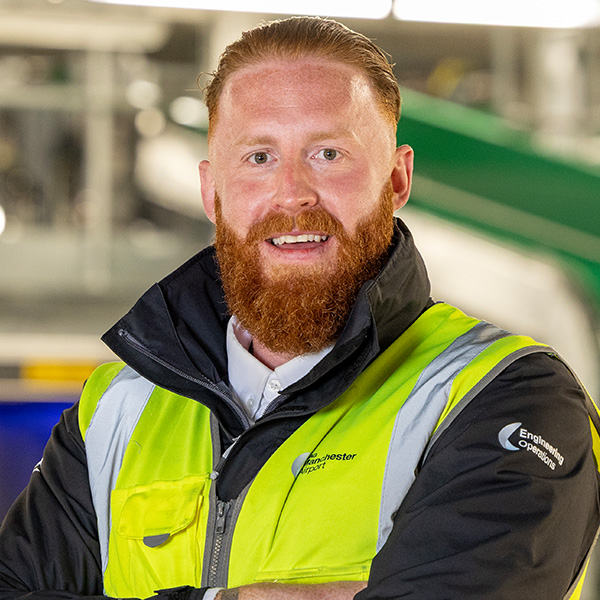
Senior Engineering Manager
Manchester AirportS Group (MAG)
From a Heat Signature to Root Cause
Morning Tea, Exhibition Viewing & Innovation Theatre Demos
Comma separated speakers , company will appear here when published
Morning Tea, Exhibition Viewing & Innovation Theatre Demos
The 4 KPIs That Sustain Reliability Results: From Reactive Firefighting to Executive Buy-In
Comma separated speakers , company will appear here when published
Many organisations begin a reliability journey with energy, but struggle to sustain momentum once leadership changes, budgets tighten, or operational pressure returns.
This session shows how Cargill has kept Maintenance & Reliability visible, relevant, and supported across multiple locations for more than two decades.
Using real examples, Walter will explain how four simple plant-level indicators help translate maintenance performance into business language, engage senior leaders, and move sites from reactive firefighting toward proactive reliability.
Attendees will leave with a practical approach they can apply in their own business.
- How to secure and sustain senior leadership support for reliability
- How to measure plant reliability with four practical indicators
- How to use KPIs to shift culture from reactive to proactive
Breaking Free from Reactive Maintenance Culture
Building Change Management Capability in Maintenance Teams

Sr Director Capital Engineering and Reliability Excellence
Cargill
The 4 KPIs That Sustain Reliability Results: From Reactive Firefighting to Executive Buy-In
Application of Technology – Data Fusion and Drone Enabled Inspections with the Asset Management Strategy at Grain LNG
Comma separated speakers , company will appear here when published
With over 70,000 physical assets, with different vintages and like many industries, we faced growing pressure to find better, safer, and more efficient ways of working.
We hear a lot of familiar terms and buzzwords within the industry:
- digital roadmaps
- AI
- digital twins
- big data
It can become a bit overwhelming and lead you down multiple different paths…The real challenge isn’t availability of the systems out there — it’s relevance.
So rather than asking “What technology should we adopt?”, we asked:
What problems are we trying to solve — today and in the future? What was right for our business. What was right for our Asset Management Strategy and long term strategic thinking?
3 Key Learnings:
- Bring the people within the business along the AM and technology journey with you – do not do it in isolation
- Some systems will fail – it’s what you learn from these failings that will enhance your future strategy
- Treat your data as Assets!
Converting Data into Decisions That Stick
Embedding Long-Term Strategic Asset Management Thinking

Asset Lifecycle Manager
Grain LNG
Application of Technology – Data Fusion and Drone Enabled Inspections with the Asset Management Strategy at Grain LNG
Capital Project Turnover Effectiveness Provides the Foundation for Life Cycle Reliability
Comma separated speakers , company will appear here when published
Capital project turnover effectiveness serves as the cornerstone for life cycle reliability within asset management. Capital project turnover refers to the process of transitioning assets from the construction and commissioning phase to operational use; a critical hand off point that can significantly impact an asset's long-term performance. Best practices will be discussed, ranging from thorough documentation processes, robust commissioning, maintenance function build and seamless communication between project teams and operations staff. Effective turnover lays the groundwork for optimised maintenance strategies, accurate asset data management and proactive reliability engineering.
Through case studies and practical frameworks of early integration of reliability principles during turnover will be shown to prevent future failures, reduce unplanned downtime and increase asset productivity. Key themes include the importance of setting up maintenance technicians for success, so they can hit the ground running as systems are handed over to them from the project team. The role of digital tools in facilitating data transfer and standardising turnover processes will also be emphasised. Recommendations for organisations seeking to strengthen their turnover protocols, highlighting the link between meticulous project completion and sustained asset value will be shown.
Breaking Free from Reactive Maintenance Culture

Senior Director, Project Management
Johnson & Johnson
Capital Project Turnover Effectiveness Provides the Foundation for Life Cycle Reliability
Driving Predictive Maintenance (PdM) to the Next Level
Comma separated speakers , company will appear here when published
Nippon Sanso (formerly Nippon Gases and Praxair) has been developing their strategy for PdM over the past decades. Today, a next iteration in that strategy comes with digitalization. I will walk the audience through the different parts of our approach, including very hands-on case studies.
- Who is Nippon Sanso?
- PdM strategy
- PdM techniques
- Human factor in PdM
- The future…
3 Key Learnings:
- How to set-up a properly managed PdM program
- How to use the benefits of such a program
- How to make this program future proof

European Mechanical Manager
Nippon Sanso
Driving Predictive Maintenance (PdM) to the Next Level
Lilly Kinsale’s Condition Based Maintenance Journey, Ensuring Appropriate Asset Monitoring
Comma separated speakers , company will appear here when published
We’ll explore how combining the right techniques and technologies can improve monitoring of critical assets. In batch-based manufacturing environments, significant gaps in monitoring data can emerge for some of the most critical assets.
We’ll discuss how traditional condition-based monitoring (CBM) approaches fell short in addressing these gaps, leading to the development of hybrid solution that integrates both online and route-based monitoring.
By layering in complementary technologies, coverage was extended across all stages of operation, effectively eliminating blind spots. With these gaps closed, higher-quality data enabled timely interventions that align with business needs and schedules.
- Online monitoring systems are one tool in the solution, not the complete answer.
- Good data strengthens engineering decisions but cannot substitute for sound first principles.
- Reliability is a continuous journey of improvement, not a fixed destination to reach.
Improving the Standing and Practice of Reliability Engineering
Converting Data into Decisions That Stick

Sr Principal Engineer, Maintenance & Reliability
Eli Lilly and Company (IRE)
Lilly Kinsale’s Condition Based Maintenance Journey, Ensuring Appropriate Asset Monitoring
From Walking in Circles to Continuous Improvement - A Reliability Transformation Journey in Pet Food Manufacturing
Comma separated speakers , company will appear here when published
This presentation explores the transformation of a maintenance organisation from a reactive, breakdown-driven culture to a structured reliability-focused operation. The journey included CMMS enhancement, planning and scheduling, in-house condition monitoring, defect elimination, precision maintenance, FMEA application, and restructuring of maintenance and reliability functions.
The session will demonstrate how reliability principles were progressively embedded as organisational maturity and culture evolved. Attendees will gain practical insight into using reliability maturity assessments, structured roadmaps, and cross-functional engagement to reduce reactive maintenance, improve operational performance, and build sustainable reliability excellence.
3 Key Learnings:
- Key lessons and challenges encountered during five years of implementing reliability principles and driving continuous improvement
- The value gained from clearly separating maintenance execution and reliability engineering responsibilities
- The critical importance of maintaining strong feedback loops and engagement with frontline and shop floor engineers
Breaking Free from Reactive Maintenance Culture
Bridging the Divide Between Operations and Maintenance
Head of Reliability and Machine Safety
GA Pet Food Partners

Engineering and Procurement Director
GA Pet Food Partners
Founder
Pro-Reliability Solutions
From Walking in Circles to Continuous Improvement - A Reliability Transformation Journey in Pet Food Manufacturing
Fixing the DRIP: From Data Rich, Information Poor to Value-Driven Asset Intelligence
Comma separated speakers , company will appear here when published
Many asset-intensive organisations are DRIP: Data Rich, Information Poor. Across the asset lifecycle — design, commissioning, operation, condition monitoring, maintenance, and renewal — data is abundant and increasingly inexpensive to collect. As a result, “more data” has quietly become the default objective. Yet cost volatility, reactive work, unstable planning, and investment misalignment persist. Data accumulation is not value creation.
The core issue is architectural. Asset data is rarely structured around the economic outcomes it is meant to support. Instead, organisations move forward from data and hope insight emerges.
This session introduces a reverse, value-driven logic for fixing the DRIP. Rather than starting with data, we begin by defining the value desired: cost stability, uptime reliability, capital efficiency, and controlled risk exposure. From there, we work backward through the chain: the actions required to deliver that value; the decisions required to enable those actions; the insights required to support those decisions; the information required to generate those insights; and finally, the data required to produce that information.
This disciplined inversion — the foundation of the Data to Dollars (D2$) framework — shifts the objective from data expansion to economic alignment. It clarifies which data matters, which KPIs predict value, and which analytics roles must exist to convert asset performance into financial predictability.
Converting Data into Decisions That Stick
Contributing Editor
Reliable (US)
Fixing the DRIP: From Data Rich, Information Poor to Value-Driven Asset Intelligence
From Reactive Maintenance to Reliability at Scale: The West Fraser Journey
Comma separated speakers , company will appear here when published
West Fraser Limited, (formerly Norbord) is one of the world's largest manufacturers of engineered wood-based panel products, supplying the construction, furniture and interior fit-out sectors across North America, Europe and Asia. Operating large-scale, 24/7 manufacturing facilities where downtime directly impacts production performance, the business recognised the need to move beyond reactive maintenance and strengthen its reliability strategy.
This session explores West Fraser's ongoing journey to improve asset availability, reduce unplanned downtime and make better maintenance decisions through greater visibility of asset condition and operational performance. Attendees will hear practical lessons learned, the challenges encountered, and how reliability-focused thinking is helping drive operational improvements across the site.
- Setting the Scene - Who is West Fraser Limited (formerly Norbord), the scale of operations and the importance of uptime in continuous manufacturing
- The Challenge - the existing reactive maintenance culture and reliance on tribal knowledge
- Building a Reliability Strategy - identifying critical assets while creating visibility of asset condition
- Turning Data into Action - illustrating examples of maintenance interventions and improving confidence in decision-making
- Measuring Success - Improvements in asset availability and showcasing examples of reducing downtime
- What's Next? - expanding into additional process areas and continuing the journey towards predictive maintenance
Breaking Free from Reactive Maintenance Culture

Automation Development Engineer
West Fraser Europe Limited
From Reactive Maintenance to Reliability at Scale: The West Fraser Journey
Doing It Once vs Doing It Every Time: Asset Health at Scale
Comma separated speakers , company will appear here when published
Northumbrian Water is a mature asset management organisation with ISO 55001 accreditation, advanced risk management capabilities, and its largest-ever investment programme underway. As its asset management approach continued to evolve, the organisation identified the need for a single, scalable, and governed asset health measure embedded within its enterprise asset management system. Working with Cohesive, Northumbrian Water developed a proof of concept to test how asset health could be measured consistently, automated across asset classes, and made visible to operational teams. The initiative also uncovered a critical relationship between asset health scoring and the quality of underlying asset data.
- The case for a single, governed asset health measure
- Turning asset risk into actionable health insights
- Embedding asset health where operational teams need it most
- Why data quality became the unexpected story
- What the proof of concept proved and challenged
- The path towards trusted operational and investment decisions
Managing Ageing Assets and the Obsolescence Cliff

Asset Risk Manager
Northumbrian Water

Innovations & Solutions Specialist
Cohesive
Doing It Once vs Doing It Every Time: Asset Health at Scale
You Don't Know What You Don't Know About Lubrication (What Condition Monitoring Revealed About Our Lubrication Practices)
Comma separated speakers , company will appear here when published
At Thames Water, condition monitoring data repeatedly highlighted lubrication-related defects as a significant contributor to asset health deterioration. Rather than treating lubrication as a routine maintenance activity, we repositioned it as a core reliability discipline. By combining ultrasound, oil analysis, workforce training, audit programmes and improved standards, we began identifying and eliminating lubrication-related failures before they impacted operations. This presentation will demonstrate how we used data to challenge long-standing practices, improved lubrication quality across multiple sites, and established a foundation for more proactive asset management and improved equipment reliability.
- Using condition monitoring to expose lubrication-related defects.
- Moving beyond time-based lubrication practices.
- Building workforce competence through targeted training.
- Implementing lubrication audits and governance standards.
- Applying ultrasound to optimise bearing lubrication.
- Demonstrating reliability gains through better lubrication practices.
Reliability Manager
Thames Water
You Don't Know What You Don't Know About Lubrication (What Condition Monitoring Revealed About Our Lubrication Practices)
Lunch, Exhibition Viewing & Innovation Theatre Demos
Comma separated speakers , company will appear here when published
Lunch, Exhibition Viewing & Innovation Theatre Demos
Is it My Oil or Equipment? Which is failing?
Comma separated speakers , company will appear here when published
In the field, we are faced with quick decisions especially when the equipment fails. We need to troubleshoot and determine if something is inherently wrong with the equipment or if there is another factor. Typically, the lubricant gets blamed as this is the most common element to the system.
In this session, we will diagnose early warning signs of oils failing, some basic tests which can be done to monitor the health of the oils and other preventive measures which can be implemented to keep your oils clean and your equipment running.
- Easy tips and tricks which can be implemented in the field to diagnose lubricant failures.
- Basic understanding of an oil analysis report and the importance of condition monitoring.
- Storage and Handling techniques which can be implemented immediately.
Improving the Standing and Practice of Reliability Engineering

CEO and Founder
Strategic Reliability Solutions (TTO)
Is it My Oil or Equipment? Which is failing?
Plugging the STEM Skills Gap
Comma separated speakers , company will appear here when published
The STEM skills shortage is costing the UK economy approximately £1.5bn every year and is expected to grow. There is an urgent need to attract, recruit and retain a larger and more diverse STEM talent pool to meet the needs of our community and to ensure innovation can thrive.
In this session Alex will discuss how award winning STEMAZING was set up to raise the STEM awareness and aspirations of young people. Hear how our non-profit initiatives are not only inspiring the next generation but also empowering our current STEM workforce with improved communication skills, confidence and purpose through social value.
Over the last 5 years since our inception we have led over 200,000 STEM engagements with young children led by diverse STEM role models that we train to maximise their effectiveness.
Developing and Retaining the Maintenance Workforce
Founder & CEO
STEMAZING
Plugging the STEM Skills Gap
Commissioning After Plant Outages, Getting It Right First Time
Comma separated speakers , company will appear here when published
The presentation addresses a common and costly issue in maintenance and reliability. The lack of a structured, accountable process for commissioning equipment back into service after a plant outage. Based on experience across Heidelberg Materials sites within the UK, it sets out a practical case study showing how a repeatable commissioning standard was developed and introduced across three cement works and three grinding plants.
The session explains how accountability is set across three phases which are commissioning checks, snagging repairs, and final production sign-off. With clear ownership at each stage. It shows how Machine Sentry is used as the single source of truth for commissioning data, capturing asset-level checks, tracking defects through to closure, and maintaining a full audit trail.
It also covers how vibration and oil analysis are built into the commissioning process, helping to identify issues missed during shutdown before they develop into failures. A hard quality gate is applied so no asset is handed back to production until all statuses are green, and the reality of maintaining this under restart pressure is discussed. The content focuses on practical application rather than theory, including the people, process, and technical challenges of standardising across multiple sites.
Bridging the Divide Between Operations and Maintenance
National Maintenance and Reliability Manager
Heidelberg Materials UK
Commissioning After Plant Outages, Getting It Right First Time
Driving Manufacturing Performance: From Reactive Maintenance to AI-Enabled Optimisation
Comma separated speakers , company will appear here when published
Müller Milk & Ingredients needed to reduce recurring equipment failures, hidden losses and dependence on experience-led decision-making across its manufacturing network. Working with IntelliAM, Müller first built a connected condition-based monitoring foundation that contextualised asset data and enabled earlier, planned intervention. The programme materially reduced failure rates and brought recurring issues such as slew rings under control. The next phase connects PLC, process, alarm and machine-setting data through an AI platform, accelerating root-cause diagnosis and moving operations towards scalable, closed-loop optimisation.
- Why reactive, experience-led operations concealed performance loss
- How connected monitoring created a reliable data foundation
- Turning contextualised insight into planned interventions
- Quantifying impact on failures, reliability and disruption
- Extending asset health insights into process optimisation
- Practical lessons for scaling industrial AI responsibly
Bridging the Divide Between Operations and Maintenance
Navigating AI Hype Without Losing Focus on Fundamentals

CEO
IntelliAM

Head of Supply Chain Excellence
Muller
Driving Manufacturing Performance: From Reactive Maintenance to AI-Enabled Optimisation
Our Maintenance and Reliability Journey at Brabant Water
Comma separated speakers , company will appear here when published
Brabant Water is focused on strengthening maintenance execution while giving field teams better access to the information they need to work efficiently and consistently. The session will explore how Brabant Water is modernising its maintenance processes using SAP, with a particular focus on SAP Service and Asset Manager (SSAM) to support technicians in the field. It will share practical lessons from adoption, connecting field execution with core maintenance processes and improving the quality of information captured at the point of work, as well as Brabant Water’s priorities and roadmap for the next stage of its maintenance transformation.
- Brabant Water in a nutshell
- Implementation SSAM
- Lessons learned
- Loadmap SAP -> FSA, Dynamic Forms, WCM (PTW)
Bridging the Divide Between Operations and Maintenance
Maintenance Excellence Lead
Brabant Water
Our Maintenance and Reliability Journey at Brabant Water
PANEL: The Execution Gap: Why Reliability Still Breaks Down on the Shop Floor
Comma separated speakers , company will appear here when published
Most organisations have documented maintenance strategies, sophisticated systems and well-defined processes. Yet on the shop floor, the reality often looks very different.
Maintenance teams continue to lose significant time waiting for parts, chasing information, responding reactively and working around broken processes. In many cases, leaders know exactly what needs to happen — but struggle to create the operational discipline required to sustain it.
This panel discussion examines why execution remains one of the biggest unresolved challenges in maintenance and reliability. Why do organisations continue to compromise planning disciplines under pressure? Why are accountability structures often unclear? And why do so many digital transformation programs fail to improve frontline execution?
Drawing on real operational experience, panelists will debate the cultural, behavioural and leadership factors driving the execution discipline gap — and explore what it actually takes to build organisations where reliability practices are not just documented, but consistently lived every day.
Bridging the Divide Between Operations and Maintenance
Asset Management Director
Manchester Airports Group (MAG)
Sr Principal Engineer, Maintenance & Reliability
Eli Lilly and Company (IRE)
Contributing Editor
Reliable (US)
PANEL: The Execution Gap: Why Reliability Still Breaks Down on the Shop Floor
A Blended Approach to Asset Condition Management to Improve Asset Health and Performance
Comma separated speakers , company will appear here when published
United Utilities (UU) are on a Maintenance Excellence journey moving from a reactive maintenance environment to a more proactive and preventative way of working. This is to align more closely with an Industry Best Practice model.
UU undertook an independent maintenance & reliability assessment of the organisation’s operations, maintenance and reliability practices relating to the assets within the water, wastewater treatment, and bioresources facilities.
The outcomes and recommendations are part of our Maintenance Excellence strategy and plan, and we have delivered a blended approach to Asset Condition Management (ACM) to achieve two of our objectives:
- Increase our use of asset condition management techniques to deliver proactive ways of working.
- Visualise asset health and performance of our critical assets and use data to determine when to proactively repair or replace assets.
New technologies and capabilities have been implemented, along with improving knowledge and competence our people across multiple roles in the organisation.
Breaking Free from Reactive Maintenance Culture
Maintenance & Reliability Manager
United Utilities
A Blended Approach to Asset Condition Management to Improve Asset Health and Performance
How Heidelberg Materials Rebuilt Planning, Scheduling, and Backlog Discipline Worldwide
Comma separated speakers , company will appear here when published
Across a global network of plants: inconsistent planning and scheduling practices, limited backlog visibility, unclear prioritization, and uneven work management maturity were holding back reliability. Digital tools existed, but inconsistent maintenance processes kept the organization from capturing their full value. Heidelberg Materials relaunched its global Maintenance Improvement Program to rebuild the fundamentals of planning, scheduling, backlog management, and reliability governance across every site - creating a consistent foundation before scaling advanced digital solutions such as Prometheus GWOS-AI to standardize and sustain these gains worldwide.
- Establishing a global maintenance excellence foundation through a corporate program
- Standardizing planning and scheduling across 5 SAP landscapes, Infor Hexagon, and Maximo
- Engaging plants through leadership, capability building, and change management
- Using Prometheus GWOS-AI to standardize and scale best practices globally
- Converting maintenance data into actionable operational decisions
- Scaling AI only after maintenance fundamentals are stable
Navigating AI Hype Without Losing Focus on Fundamentals

Global Maintenance Excellence Manager
Heidelberg Materials AG
How Heidelberg Materials Rebuilt Planning, Scheduling, and Backlog Discipline Worldwide
From Instability to more Predictable Operations: How Reliability, Maintenance and Compliance Engineering Transformation Delivers Results
Comma separated speakers , company will appear here when published
Asset-intensive organisations often struggle with a common challenge: unpredictable equipment performance, growing compliance risk and Engineering teams that are expected to solve increasingly complex problems while operating within structures not designed to deliver reliability outcomes.
This presentation shares the transformation journey of a global industrial operation that fundamentally redefined its Engineering function to address these challenges. A new organisational vision was established, deliberately separating Engineering into three complementary disciplines: Reliability Engineering, Maintenance Engineering and Compliance Engineering. This clear delineation of purpose, accountability and governance enabled focused decision-making, improved execution and stronger alignment between asset strategy and operational outcomes.
More than an organisational redesign, the transformation created a new way of working. Through the development of a clear operating model, defined accountabilities, structured governance and active workforce involvement in the design process, the business built ownership, reduced resistance to change and established a sustainable foundation for long-term improvement.
The results demonstrated the power of aligning Engineering activities to business outcomes. Over a two-year period, the operation achieved a 51% reduction in Loss of Containment events, significantly reducing exposure to safety hazards and operational risk. Critical overdue asset strategy work reduced by approximately 44%.
This session will explore the practical lessons, leadership decisions and implementation challenges encountered throughout the transformation. Attendees will gain insights into how organisational design, governance and engineering clarity can work together to create safer, more reliable operations where stable assets support safer people, stronger compliance and more predictable business performance.
Converting Data into Decisions That Stick
Maintenance & Reliability Manager
Independent
From Instability to more Predictable Operations: How Reliability, Maintenance and Compliance Engineering Transformation Delivers Results
Thinking Bigger: The Unexpected Business Impact of Predictive Maintenance
Comma separated speakers , company will appear here when published
For Owens Corning predictive maintenance has delivered nearly $30 million in savings, but its impact has extended far beyond preventing equipment failures. Greater visibility into asset condition has changed how the organisation approaches lubrication, precision maintenance, spare parts, technician time and safety. What began as a way to better understand machine health has uncovered broader improvement opportunities and helped leadership think more strategically about reliability. This session explores how PdM can create value well beyond maintenance and how better asset data can drive smarter decisions across the operation.
- Looking beyond downtime as the measure of predictive maintenance value
- Using condition data to improve spare parts planning
- Turning failure insights into better lubrication practices
- Improving technician time, safety and maintenance effectiveness
- Expanding predictive maintenance into wider reliability initiatives
Embedding Long-Term Strategic Asset Management Thinking

Regional Reliability Engineer
Owens Corning

Customer Success Team Lead
Waites
Thinking Bigger: The Unexpected Business Impact of Predictive Maintenance
LIQUI MOLY: From Firefighting to 20% Higher Asset Availability in Twelve Months
Comma separated speakers , company will appear here when published
LIQUI MOLY fills 36 million containers of engine oil and lubricants a year at one automated German plant, shipping to over 150 countries. Before the move to a modern CMMS, maintenance was purely reactive: failures fixed after the fact, Saturdays on urgent repairs, plans in Excel, spares hidden in the warehouse. Running maintenance inside the ERP had already failed. Rather than one central digital solution, the team digitised in phases without stopping production, master data first and AI last. Availability rose by 20%, roughly 70 extra production days. Four phases, in order, including the phase most plants skip and pay for later.
- Where LIQUI MOLY started: 100% reactive, binders, Excel plans, hidden spares
- Why the ERP failed as a maintenance system, and what replaced it
- Phases 1 and 2: clean asset data, QR codes, planned work orders
- Phase 3: 4,000 spare parts inventoried and linked to machines
- Phase 4: AI on clean data, 15-minute searches became 15 seconds
- Where UK plants stall: chasing AI before the data foundation
Breaking Free from Reactive Maintenance Culture

Co-Founder and CEO
Remberg
LIQUI MOLY: From Firefighting to 20% Higher Asset Availability in Twelve Months
Changing Operational Maintenance Culture from Reactive to Condition Lead
Comma separated speakers , company will appear here when published
The business challenge was to transition from a reactive and time-based maintenance culture to a proactive, condition-led approach. To achieve this, the right techniques, tools and skills were identified to support new ways of working. To address the skills and people change aspect, we established the capability required for the transition by deploying precision maintenance tools, developing targeted training programme’s, and supported the frontline personnel's upskilling. This enabled operational and maintenance teams to adopt new technologies effectively and embed sustainable condition-based maintenance practices across areas of the business.
- The scale of the challenge / change to move away from a reactive approach
- How we identified where and what to focus our activity on
- How we brought operations and maintenance along with us
- How we developed key personnel
- What we learned along the way
Breaking Free from Reactive Maintenance Culture

Principal Mechanical Engineer
Scottish Water
Changing Operational Maintenance Culture from Reactive to Condition Lead
PANEL: The Data Paradox: Why More Isn’t Better
Comma separated speakers , company will appear here when published
Across industries, maintenance and reliability leaders are navigating a growing paradox: organisations have more operational data than ever before, yet confidence in decision-making continues to decline. Even with advanced systems in place, teams often find themselves spending more time validating and reconciling data than actually using it to drive insights. This panel will explore the widening gap between data collection and effective utilisation across sectors such as mining, energy, utilities, and infrastructure.
Rapid digitisation hasn’t just increased the volume of data—it has also introduced fragmentation, inconsistency, and a loss of historical context. Field technicians and engineers are feeling the impact, with increasing demands around data entry and quality checks. In many cases, technology risks overshadowing experience and intuition, while poor data quality begins to undermine trust in analytics and maintenance decisions.
Our panel will examine the root causes behind this “data quality versus quantity” challenge. Drawing on real-world experiences, they’ll discuss how clearer governance, stronger alignment to purpose, and improved data standards can transform raw data into meaningful, actionable intelligence. The conversation will also look at how aligning data strategies with operational and business priorities can rebuild trust and ensure data genuinely supports better outcomes.
By challenging common assumptions about digital maturity, this session reframes what it really means to be “data-driven”—shifting the focus from accumulation to relevance, and ultimately helping organisations regain confidence and clarity in their maintenance data ecosystems.
Converting Data into Decisions That Stick
Chief Maintenance Officer
United Utilities
Group Excellence Director
Finsbury Foods

Maintenance Systems Lead Engineer
Drax Group
PANEL: The Data Paradox: Why More Isn’t Better
PANEL: The People Behind Reliability: Rebuilding Maintenance Culture for the Future
Comma separated speakers , company will appear here when published
Maintenance organisations pride themselves on data-driven decision making. But while we monitor equipment condition down to the smallest detail, many organisations still have no visibility over workload sustainability or team wellbeing.
The result is a silent crisis unfolding across the industry. Experienced workers are leaving. Younger generations are questioning whether the profession offers a sustainable future. At the same time, maintenance teams are being asked to deliver more with fewer resources, under increasing operational pressure.
This panel session explores one of the most confronting questions facing maintenance leaders today: what happens when the workforce becomes the unmeasured critical asset?
Combining industry research, operational insights and real-world examples, this session examines the direct relationship between workforce, competencies, reliability and performance. It argues that the future of maintenance excellence will not simply depend on better technology or systems — but on whether organisations are prepared to finally measure, value and invest in the humans behind the work.
Breaking Free from Reactive Maintenance Culture
Building Change Management Capability in Maintenance Teams
Group Head of Engineering
Biffa

Asset Care and HV Business Lead
Severn Trent
Founder & CEO
STEMAZING
PANEL: The People Behind Reliability: Rebuilding Maintenance Culture for the Future
PANEL: The AI Reality Check – From Hype to Operational Value
Comma separated speakers , company will appear here when published
AI is rapidly reshaping maintenance and reliability, but most organisations are struggling to translate ambition into measurable results.
Why do so many AI initiatives fail to deliver, and what does this reveal about gaps in infrastructure, data readiness, and governance?
How can organisations strengthen the foundations needed to support AI without disrupting existing operations?
What role do trust, culture, and human judgement play when algorithmic insights challenge decades of experience?
How do we design human–AI collaboration models that enhance, rather than undermine, engineering decision-making?
What practical lessons can be learned from real-world successes and failures to move from experimentation to sustainable value?
This panel brings together industry experts who are navigating both the promise and pitfalls of AI in maintenance, sharing their experiences of case studies, some that succeed and some that stall. Looking at the cultural, technical, and ethical enablers required to make AI work in real operational environments.
Navigating AI Hype Without Losing Focus on Fundamentals

Owner
Two6 Services
Vice President Information Technology
Harsco Environmental

Global Reliability Leader Animal Nutrition and Health
Cargill
PANEL: The AI Reality Check – From Hype to Operational Value
Building a Culture of Resilience – How to Keep More Women in Technical Spaces
Comma separated speakers , company will appear here when published
For many women in technical spaces (engineering or construction), they have been the first to enter these fields. Being the first is simply holding the door open but others must walk into the room and cultivate more changes.
This session takes a look at the work that must be done by management, and employees to help progress these changes and build a culture of resilience to encourage more women to remain in these fields. We will talk about ways new cultures can be built to accommodate both men and women in the workforce.
3 Key Learnings:
- Build a guide to understand your workplace culture especially with female hires in predominantly male spaces.
- Learn ways to start the culture shift within the organization.
- Develop strategies to keep women in these technical spaces.
Developing and Retaining the Maintenance Workforce
Improving the Standing and Practice of Reliability Engineering
CEO and Founder
Strategic Reliability Solutions (TTO)
Building a Culture of Resilience – How to Keep More Women in Technical Spaces
Afternoon Tea, Exhibition Viewing & Innovation Theatre Demos
Comma separated speakers , company will appear here when published
Afternoon Tea, Exhibition Viewing & Innovation Theatre Demos
Moon Base: The Role of Maintenance and Reliability on the Surface of the Moon
Comma separated speakers , company will appear here when published
In addition to returning humans to the surface of the Moon, NASA has begun the creation of a permanent base at the Moon’s south pole. In the coming years, this Moon Base will establish a permanent human presence on the lunar surface. With a city on the Moon’s surface, what maintenance and reliability challenges await and how will NASA handle them?
This keynote will provide an overview of NASA’s plans to return humans to the lunar surface with the Artemis program and explain NASA’s plans for establishing a permanent human presence with the Moon Base program. Establishing an outpost in the hostile and rugged lunar environment poses a number of maintenance and reliability challenges, many of which are identical to those being faced by industry today on Earth.
As an experiment to conclude the first day of the MAINSTREAM Summit, consider the potential for applying industry’s approaches to addressing Earth-based maintenance and reliability challenges to lunar applications.
Securing Sustained Leadership Buy-in and Investment
NASA Moon Base Mission & Systems Interoperability Office
NASA (US)
Moon Base: The Role of Maintenance and Reliability on the Surface of the Moon
MAINSTREAM Networking Party
Comma separated speakers , company will appear here when published
MAINSTREAM Networking Party
Tea & Coffee and Exhibition Viewing
Comma separated speakers , company will appear here when published
Tea & Coffee and Exhibition Viewing
Day 2 MAINSTREAM UK Summit Opening
Comma separated speakers , company will appear here when published
Day 2 MAINSTREAM UK Summit Opening
XCHANGE: Capturing Institutional Knowledge
Comma separated speakers , company will appear here when published
A generation of contextual knowledge is heading for the door — but the organisations getting ahead of it are proving that structured capture, mentoring models, and smart use of AI can preserve what matters most. What's working, and how do you start?

Maintenance Engineering Manager
AETC
XCHANGE: Capturing Institutional Knowledge
XCHANGE: From Data Rich to Decision Ready
Comma separated speakers , company will appear here when published
Most organisations have more data than they know what to do with. The ones making progress have stopped chasing volume and started building trust. This session shares practical approaches to turning the data you already have into decisions people are confident to act on.

Product Owner (Maintenance Strategy & Optimisation)
Scottish Water
XCHANGE: From Data Rich to Decision Ready
XCHANGE: From Pilot to Production: What Scaled AI Actually Looks Like
Comma separated speakers , company will appear here when published
76% of AI projects stall after the proof of concept. But the 11% who've broken through have lessons worth hearing. This session unpacks what separates a successful AI scale-up from an expensive experiment, and where to focus first.
Global Reliability Leader Animal Nutrition and Health
Cargill
XCHANGE: From Pilot to Production: What Scaled AI Actually Looks Like
XCHANGE: From Supervisor to Leader: Building the Capability Your Frontline Needs
Comma separated speakers , company will appear here when published
Maintenance supervisors are promoted for technical skill, then expected to lead people, manage change, and drive performance with no formal training. This session explores what practical leadership development looks like for the people who set the tone on the floor every day.
Group Excellence Director
Finsbury Foods
XCHANGE: From Supervisor to Leader: Building the Capability Your Frontline Needs
XCHANGE: Speaking the CFO's Language: Turning Reliability into a Business Conversation
Comma separated speakers , company will appear here when published
Only 23% believe their asset strategy is aligned to the business, but the ones who've cracked it share a common skill: translating technical value into commercial language. This session builds the bridge between the workshop floor and the boardroom table.

Managing Director
Maintain Reliability
XCHANGE: Speaking the CFO's Language: Turning Reliability into a Business Conversation
XCHANGE: Precision Maintenance: The Discipline Behind Repeatable Reliability
Comma separated speakers , company will appear here when published
Precision alignment, balancing, torquing, and installation practices consistently deliver measurable improvements in equipment life and reliability. This session shares the standards, tools, and cultural disciplines that separate precision programmes from good intentions.
Manager of Engineering Performance
Yorkshire Water
XCHANGE: Precision Maintenance: The Discipline Behind Repeatable Reliability
XCHANGE: The Art and Science of Great Planning and Scheduling
Comma separated speakers , company will appear here when published
Work management remains the backbone of effective maintenance, yet only 41% report high compliance with their own procedures. This session brings together planners, schedulers, and their leaders to share what world-class planning discipline looks like in practice and how to build it into the daily rhythm.
Founder
Pro-Reliability Solutions
XCHANGE: The Art and Science of Great Planning and Scheduling
XCHANGE: Preparing Maintenance Teams for Assets That Don't Exist Yet
Comma separated speakers , company will appear here when published
The energy transition is delivering new asset classes with unfamiliar failure modes. Forward-thinking organisations are involving maintenance teams early in transition planning and investing in capability before the assets arrive. How do you prepare for what you haven't maintained before?

Head of Project Management and Engineering
Heidelberg Materials
XCHANGE: Preparing Maintenance Teams for Assets That Don't Exist Yet
XCHANGE: Building a Workforce That Reflects the Future, Not the Past
Comma separated speakers , company will appear here when published
Practical changes — from job titles and flexible work arrangements to visible career pathways — are already expanding the talent pool in measurable ways. This session brings together leaders who've made diversity and inclusion a workforce advantage, not a compliance exercise.

Global Group Head of Workplace Maintenance and Reliability
Babcock International Group
XCHANGE: Building a Workforce That Reflects the Future, Not the Past
XCHANGE: Operational Readiness: Commissioning Assets That Are Ready to Maintain From Day One
Comma separated speakers , company will appear here when published
Too many assets arrive without maintenance strategies, spare parts lists, or documentation. Operational readiness is about getting maintenance a seat at the design and commissioning table so that assets are ready to run and ready to maintain from handover.

Head of Asset Planning, Asset Strategy
Affinity Water
XCHANGE: Operational Readiness: Commissioning Assets That Are Ready to Maintain From Day One
XCHANGE: People Metrics on the Dashboard: Measuring What Actually Matters
Comma separated speakers , company will appear here when published
You track every metric on your assets. What if you applied the same rigour to your people? Organisations pioneering workforce wellbeing measurement are seeing direct links to performance, retention, and safety. This session explores what to measure and how to start.
Maintenance Systems Lead Engineer
Drax Group
XCHANGE: People Metrics on the Dashboard: Measuring What Actually Matters
XCHANGE: Rebuilding the Trades Pipeline: Structural Solutions That Are Working
Comma separated speakers , company will appear here when published
The apprenticeship gap is real, but new models are emerging. Accelerated pathways, competency-based progression, technical college partnerships, and counter-cyclical investment strategies are starting to rebuild what boom-bust cycles broke. Who's doing it well?
CEO and Founder
Strategic Reliability Solutions (TTO)
XCHANGE: Rebuilding the Trades Pipeline: Structural Solutions That Are Working
XCHANGE: Making Maintenance a Destination Career
Comma separated speakers , company will appear here when published
The profession competes for talent against industries with better visibility and stronger employer brands. But organisations that have repositioned maintenance as a career of purpose, progression, and impact are winning the talent war. What are they doing differently?
Chief Engineer
Premier Foods
XCHANGE: Making Maintenance a Destination Career
XCHANGE: Predictive Analytics in Practice
Comma separated speakers , company will appear here when published
Predictive maintenance ranks as the second most adopted AI application, but there's a gap between buying the tool and trusting the output. This session brings together practitioners who've moved predictive analytics from dashboards into daily decision-making and explores what it took to get there.
Owner
Two6 Services
XCHANGE: Predictive Analytics in Practice
XCHANGE: Analytics-Ready: How to Know When Your Data Can Support the Dashboards
Comma separated speakers , company will appear here when published
Visualisation tools on poor-quality data don't create insight. They scale confusion. This session helps you honestly assess your data readiness and build the governance foundations that make analytics trustworthy and useful.

Managing Director
Ailsa Reliability Solutions
XCHANGE: Analytics-Ready: How to Know When Your Data Can Support the Dashboards
Day 2 Morning Tea, Exhibition Viewing & Innovation Theatre Demos
Comma separated speakers , company will appear here when published
Day 2 Morning Tea, Exhibition Viewing & Innovation Theatre Demos
WORKSHOP: Tracking Success Teaming Adventure
Comma separated speakers , company will appear here when published
In this story-driven session, participants form teams and through video and stories are transported into even changing world of a wildlife tracker deep in the Kruger National Park. They will need to evaluate incomplete evidence, solve problems and make decisions together. Leader are exposed to what it takes to be a Master Tracker – discernment, curiosity, adaptability, practical imagination and reverence. They will need to rely on collective judgement while experiencing how silos, assumptions and reactive thinking undermine performance. The shared challenge helps maintenance leaders bridge operational divides, convert information into trusted decisions and strengthen a proactive reliability mindset. It creates practical insights for building trust, sharing critical knowledge and sustaining coordinated action when pressure, priorities and leadership change.
Ian Schubach is CEO of leadership consultancy Red Leaf and co-founder of Tracking Success. For three decades, he has delivered keynotes, leadership programmes and facilitated team meetings across Asia Pacific, Europe, South Africa and the United States. A former safari guide and experienced storyteller, Ian uses nature's universal truths to illuminate business challenges. He pioneered the Indoor Teaming Adventure methodology, creating immersive experiences that accelerate leadership development, strengthen collaboration and help organisations achieve their priorities.
African Safari Guide and Adventurer
WORKSHOP: Tracking Success Teaming Adventure
WORKSHOP: Data to Dollars – Converting Data into Verified Value
Comma separated speakers , company will appear here when published
Many organizations are data rich but information poor, collecting vast amounts of operational data without extracting meaningful insights or converting it into financial returns. This framework transforms raw data into actionable insights, informed decisions, targeted actions, and verified value, turning data into dollars.
By ensuring data integrity, leveraging predictive analytics, and implementing precision maintenance strategies, businesses can shift from reactive problem-solving to proactive asset optimization—enhancing reliability, reducing costs, increasing safety, improving sustainability, and protecting organizational reputation.
Embedding this data-to-value methodology enables organizations to make evidence-based decisions that drive profitability and long-term resilience.
Converting Data into Decisions That Stick
Contributing Editor
Reliable (US)
WORKSHOP: Data to Dollars – Converting Data into Verified Value
WORKSHOP: Asset Management in the Age of Artificial Intelligence: Emerging Insights from AI and Asset Management Research
Comma separated speakers , company will appear here when published
Many organisations are rushing to deploy AI into maintenance and asset management while still operating with fragmented data, disconnected systems, inconsistent asset structures, and reactive cultures. The result is often more noise, more dashboards, and greater confusion rather than better decisions.
Yet the barriers to successful AI adoption are not only technical. Trust, organisational culture, decision ownership, workforce anxiety, poor cross-functional alignment, and weak change management capability frequently undermine adoption long before technical limitations appear.
Drawing on practical asset management experience and current research into AI adoption barriers, this session explores how lifecycle thinking, contextualised information, and organisational readiness must be established before AI can deliver sustainable operational value.
Navigating AI Hype Without Losing Focus on Fundamentals
Owner
Two6 Services
WORKSHOP: Asset Management in the Age of Artificial Intelligence: Emerging Insights from AI and Asset Management Research
WORKSHOP: The Journey Towards Reliability Excellence
Comma separated speakers , company will appear here when published
Many organisations aspire to achieve world-class reliability, yet remain trapped in reactive maintenance, recurring failures, and short-term firefighting. The challenge is rarely a lack of tools; it is understanding where to begin, how the various reliability disciplines fit together, and how to build a sustainable improvement journey.
This 90-minute masterclass provides a practical roadmap for organisations seeking to improve asset performance, reduce unplanned downtime, lower maintenance costs, and create a culture of reliability. Drawing upon more than 40 years of industry experience across manufacturing, mining, energy, infrastructure, food, pharmaceutical, and process industries, Gary Tyne will share the key stages of the reliability journey and the proven methods used by leading organisations.
Participants will gain an overview of the essential reliability tools and methodologies, including Asset Criticality Analysis, FMEA/FMECA, Reliability Centred Maintenance (RCM), Root Cause Analysis (RCA), Planning & Scheduling, Condition Monitoring, Precision Maintenance, Defect Elimination, and Reliability Engineering. The session will demonstrate how these tools work together as part of a structured reliability improvement programme rather than isolated initiatives.
The workshop will conclude with an introduction to the Reliability Maturity Assessment, providing attendees with a practical approach to benchmarking their current state, identifying improvement opportunities, and developing a roadmap towards Reliability Excellence.
Whether you are an operations leader, engineering manager, maintenance professional, reliability engineer, or business executive, this session will provide valuable insights into building a more reliable, resilient, and profitable organisation.
Breaking Free from Reactive Maintenance Culture
Founder
Pro-Reliability Solutions
WORKSHOP: The Journey Towards Reliability Excellence
WORKSHOP: Going Beyond Lubricant Failure Modes to Identify the Real Root Causes
Comma separated speakers , company will appear here when published
We are familiar with various lubricant failure modes which exist but how often do we take the time to really dive into how these failures occurred. In this session, we will do a deep dive into the oxidation failure mode, how it is caused, ways of identifying its presence and some of the real root causes behind this mechanism. We go beyond just identifying the failure mode but developing some measures (physical, human and systematic) which can be implemented to prevent its occurrence in the future.
Improving the Standing and Practice of Reliability Engineering
CEO and Founder
Strategic Reliability Solutions (TTO)
WORKSHOP: Going Beyond Lubricant Failure Modes to Identify the Real Root Causes
WORKSHOP: Beyond AI: Key Contributing Factors to a Successful Predictive Maintenance Program
Comma separated speakers , company will appear here when published
You have more asset data than ever. But does it improve your asset reliability?
AI can process vast amounts of this data, detect patterns, and flag anomalies faster than any engineer. But what happens when the algorithm meets the reality of your assets and operating conditions?
We will explore which measurements really matter, how to separate useful insights from noise, and how to turn data into maintenance decisions that create value.
Do you want to understand how AI genuinely improves maintenance decisions, where human expertise remains indispensable, and why success comes from combining the strengths of both? Then this is a session for you.
Because a successful predictive maintenance program starts with a clear purpose, not with collecting more data.
3 Key Learnings:
- Why digitizing predictive maintenance is not only about installing more sensors.
- Recognize the pitfalls of an AI driven approach without “learning it the hard way”.
- How digitalization will bring benefit to the full maintenance and reliability community in the long run.
Navigating AI Hype Without Losing Focus on Fundamentals

Deputy CEO
I-care Reliability
WORKSHOP: Beyond AI: Key Contributing Factors to a Successful Predictive Maintenance Program
MAINSTREAM UK Summit Close: Light Lunch, Exhibition Viewing & Announce Prize Winners
Comma separated speakers , company will appear here when published
MAINSTREAM UK Summit Close: Light Lunch, Exhibition Viewing & Announce Prize Winners
Session Title

Heading


